You’ve probably done it before.
You’re shopping for a new SUV, comparing features, fuel economy, cargo space, and of course, safety ratings.
You see one vehicle with a five-star rating.
Another earns a Top Safety Pick award.
A third boasts dozens of advanced driver-assistance systems and enough acronyms to make your head spin.
At that point, it’s easy to assume you’ve found the safest vehicle on the road.
But here’s a question most buyers never ask:
What happens when the real world doesn’t follow the crash test script?
Because life rarely does.
Real accidents don’t happen inside laboratories.
They don’t happen at carefully controlled speeds.
They don’t happen with perfect impact angles.
And they certainly don’t happen with engineers standing nearby collecting data.
The truth is that some of the most dangerous situations drivers face today aren’t measured by traditional safety ratings at all.
And that’s where the conversation gets interesting.
The Crash Test Illusion
To be clear, crash testing is incredibly valuable.
Organizations such as the National Highway Traffic Safety Administration (NHTSA) and the Insurance Institute for Highway Safety (IIHS) have helped make modern vehicles safer than ever before.
Compared to vehicles built 20 or 30 years ago, today’s SUVs are engineering marvels.
Stronger frames.
Smarter airbags.
Advanced seatbelt systems.
Electronic stability control.
Automatic emergency braking.
Lane-keeping assistance.
Blind-spot monitoring.
The list keeps growing.
But every crash test has one unavoidable limitation:
It must be standardized.
Manufacturers need a consistent way to compare vehicles, so tests are performed under controlled conditions using repeatable scenarios.
That means the vehicle knows exactly how it’s going to be hit.
The engineers know exactly where the impact will occur.
The speed is predetermined.
The angle is predetermined.
The variables are controlled.
Real life doesn’t work that way.
The Accident Nobody Planned For
Imagine you’re driving home from work.
Traffic is moving smoothly.
The weather is clear.
Then suddenly another vehicle crosses the median.
Or a distracted driver drifts into your lane.
Or an overloaded truck loses control.
Or a stolen vehicle speeds through an intersection.
None of those scenarios occur exactly like laboratory testing.
Every accident introduces variables that cannot be duplicated in a controlled environment.
Vehicle speed.
Road conditions.
Weather.
Driver reactions.
Vehicle weight.
Multiple impacts.
Secondary collisions.
The result is that real-world accidents often produce outcomes that differ significantly from what crash tests predict.
When accidents result in injuries despite high safety ratings, understanding your legal options becomes important. Jacksonville car injury attorneys can help determine liability and navigate the complex insurance claims process, especially in cases where safety features were expected to prevent or minimize injuries.
A five-star vehicle may perform exceptionally well in one type of impact and far less effectively in another.
That doesn’t mean crash tests are wrong.
It simply means they’re incomplete.
Bigger Doesn’t Always Mean Safer
SUVs have become incredibly popular because people naturally associate size with safety.
And in some situations, that assumption is correct.
A larger vehicle generally offers more structural material between occupants and an impact.
More mass can also provide advantages during certain collisions.
However, bigger vehicles introduce their own challenges.
Higher centers of gravity.
Longer stopping distances.
Greater rollover potential.
Different handling characteristics.
Many drivers don’t fully appreciate these tradeoffs until an emergency situation occurs.
An SUV that feels incredibly secure during a daily commute can behave very differently during sudden evasive maneuvers at highway speeds.
Physics doesn’t care about marketing brochures.
Every vehicle represents a series of compromises.
The key is understanding which compromises matter most for your specific risks.
Safety vs. Security: The Conversation Most People Never Have
Here’s where things become even more interesting.
Most people use the word “safe” when discussing vehicles.
But safety and security are not the same thing.
Safety focuses on accidents.
Security focuses on threats.
Traditional crash testing evaluates safety.
It does not evaluate security.
For example, crash tests don’t measure:
- Carjacking attempts
- Armed attacks
- Road-rage incidents
- Civil unrest
- Forced vehicle entry
- Coordinated criminal attacks
- Ballistic threats
- Ambush situations
Yet these incidents occur every day around the world.
For business owners, executives, public officials, celebrities, cash-in-transit operators, and high-net-worth individuals, these risks can be just as important as collision protection.
In some regions, they may be more important.
The Rise of Real-World Threats
Vehicle theft has become increasingly sophisticated.
Criminals now use relay attacks, signal amplification devices, cloned key fobs, GPS tracking methods, and other advanced techniques.
Carjackings continue to occur in major cities.
Organized criminal groups target luxury vehicles.
Road-rage incidents sometimes escalate into violence.
Social unrest can quickly transform ordinary roads into dangerous environments.
None of these threats appear in crash-test ratings.
A vehicle can earn perfect safety scores while offering little protection against intentional attacks.
That doesn’t make the ratings wrong.
It simply highlights the difference between accident protection and personal security.
What Bulletproof Vehicles Actually Do
When people hear the phrase “bulletproof car,” many picture a movie scene.
A politician riding in a massive armored limousine.
A military convoy crossing hostile territory.
A celebrity surrounded by security personnel.
The reality is much different.
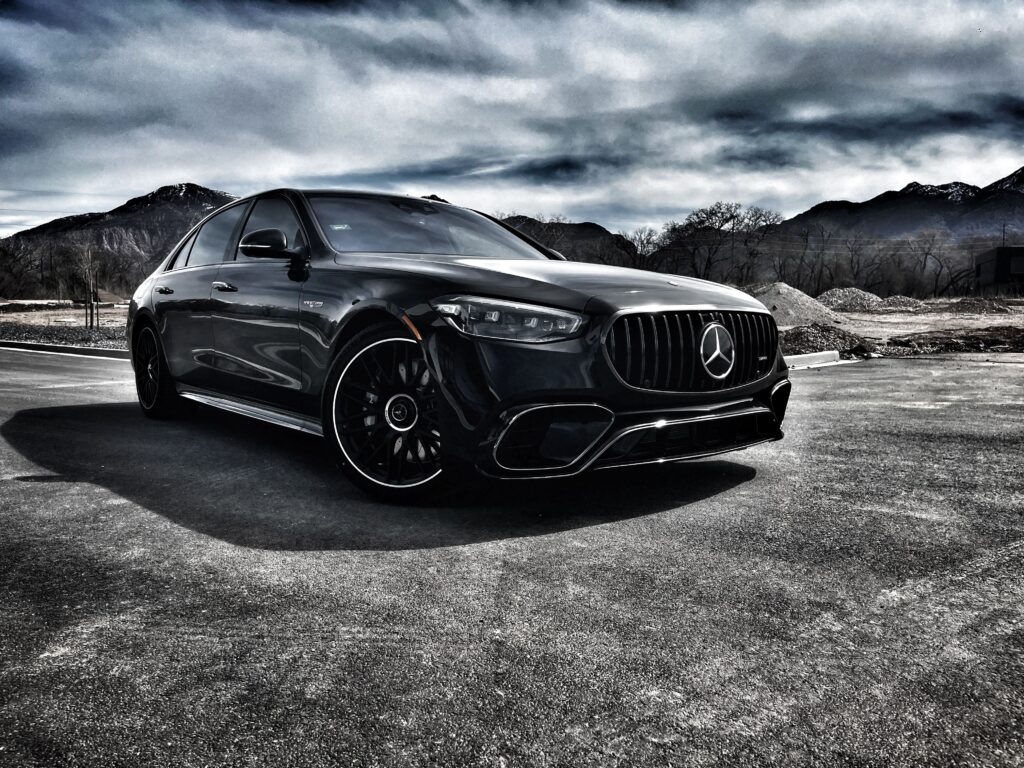
Modern armored vehicles are often nearly indistinguishable from their factory counterparts.
The average person walking through a parking lot may never realize a vehicle has been armored.
Yet beneath the surface, significant upgrades may exist.
Ballistic steel reinforcement.
Armored composite materials.
Multi-layer ballistic glass.
Run-flat tire systems.
Reinforced suspension components.
Protected battery and fuel system areas.
These upgrades are designed to provide occupants with one thing:
Time.
Time to escape.
Time to reach safety.
Time to avoid becoming victims.
Why Ballistic Glass Matters
One of the most vulnerable parts of any vehicle is its glass.
Traditional automotive glass is designed primarily for visibility and basic impact protection.
Ballistic glass serves a different purpose.
It is engineered to absorb and disperse energy from ballistic threats while maintaining a protective barrier around occupants.
At Armormax, ballistic glass systems are engineered to work as part of a larger protection package.
The goal isn’t simply stopping a projectile.
The goal is preserving the integrity of the vehicle’s protective shell during a critical incident.
Because once that protective envelope is compromised, occupant risk rises dramatically.

Run-Flat Tires: The Unsung Hero
When people think about armored vehicles, they usually focus on steel and glass.
But one of the most important safety features may actually be hidden inside the tires.
Run-flat systems allow a vehicle to continue moving even after significant tire damage.
Why does that matter?
Because stopping is often the worst option.
If a vehicle becomes immobilized during an attack, accident, or dangerous encounter, occupants lose their most important defensive advantage: mobility.
The ability to continue driving—even for a limited distance—can make the difference between danger and safety.
The Human Factor
No technology can eliminate risk.
Not airbags.
Not crash tests.
Not autonomous driving systems.
Not armored vehicles.
The greatest safety system remains the person behind the wheel.
Driver training.
Situational awareness.
Good judgment.
Defensive driving habits.
These factors consistently influence outcomes more than any piece of equipment.
The best security strategy combines capable vehicles with capable drivers.
Technology should support good decisions—not replace them.
What Real Protection Looks Like
The safest vehicle isn’t necessarily the one with the highest crash-test score.
Nor is it necessarily the heaviest.
Or the most expensive.
Or the one with the most gadgets.
Real protection comes from understanding your actual risks.
For one family, that might mean prioritizing crashworthiness and child safety.
For a business executive, it might mean combining crash protection with ballistic protection.
For a cash-in-transit operator, it may mean preparing for organized criminal attacks.
For a public official, it could involve planning for targeted threats.
Different risks require different solutions.
The important thing is recognizing that no single rating can measure every danger a driver may encounter.
Looking Beyond the Sticker
Consumers have more information available today than ever before.
Safety ratings remain valuable.
They absolutely should be part of the buying process.
But they shouldn’t be the entire conversation.
The real world is messy.
Unpredictable.
Complex.
Accidents don’t follow laboratory rules.
Criminals don’t follow laboratory rules.
Emergencies don’t follow laboratory rules.
The vehicles that protect people best are the ones designed with real-world scenarios in mind.
That’s why at Armormax, we believe vehicle protection should go beyond crash tests.
Because when your family, your employees, or your life is riding inside a vehicle, the question isn’t whether it earned five stars on paper.
The question is whether it’s prepared for the threats that exist outside the laboratory.
And sometimes, those are two very different things.
Looking for more information on transforming your vehicle into a bulletproof car? Reach out to Armormax here or by calling them at 1-801-393-1075.