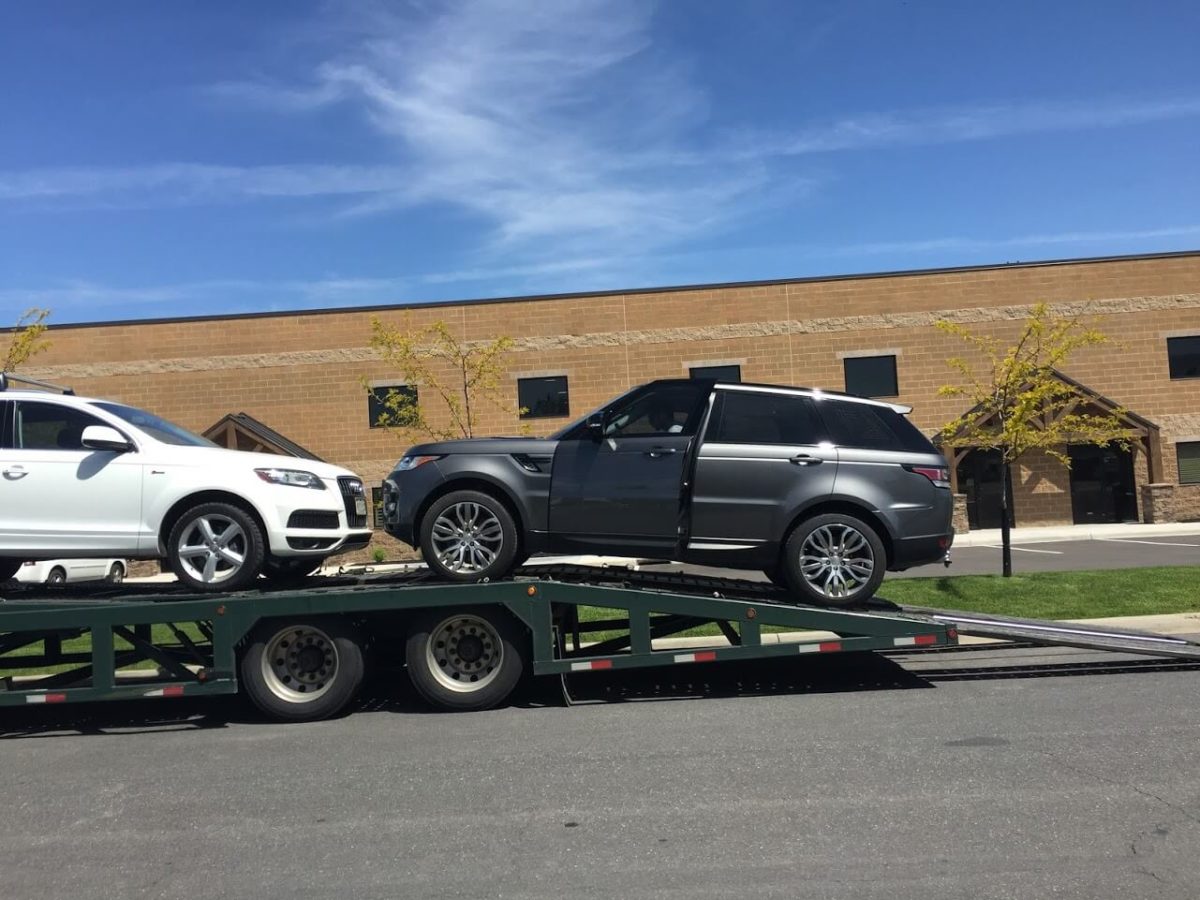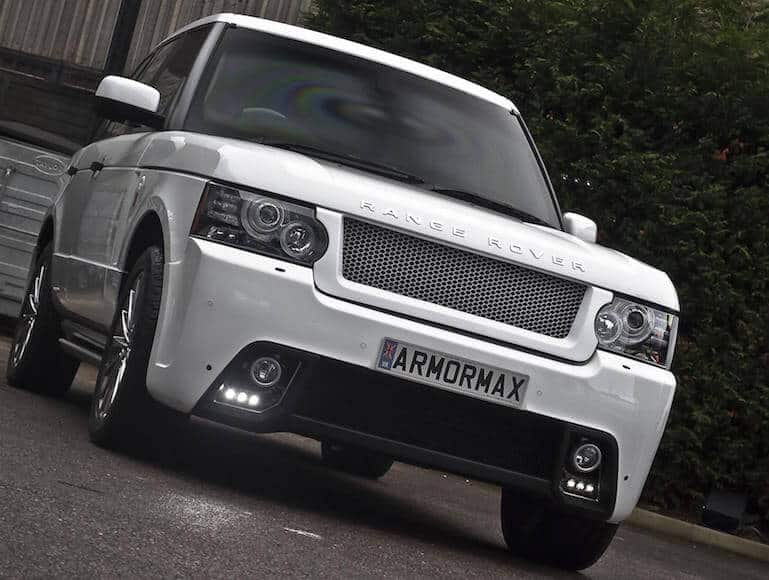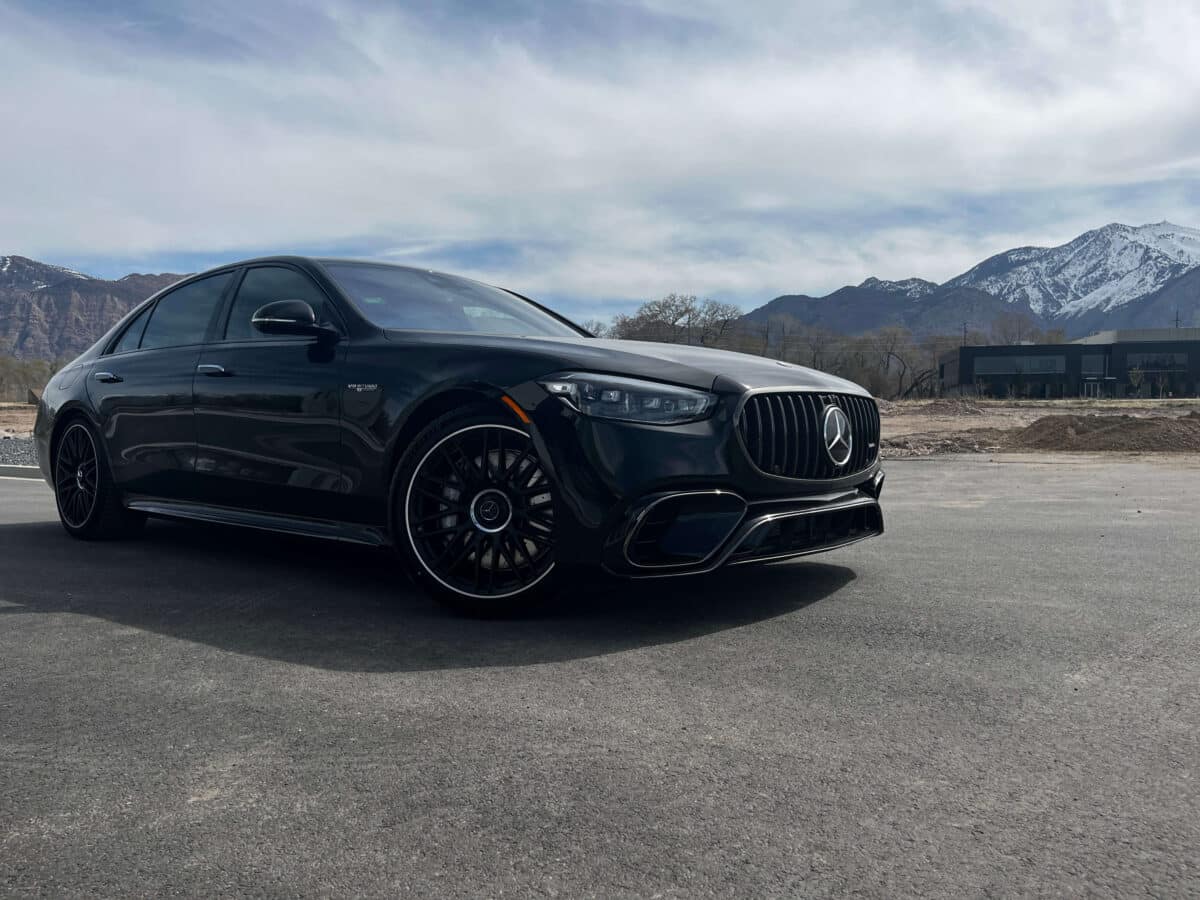
Looking to buy or sell your bulletproof car? Reach out to Armormax at 801.393.1075 or our contact form here.
When people consider buying an armored vehicle, the conversation usually centers on protection.
How much does it cost? What ballistic level should I choose? How much weight does the armor add? Which SUV makes the best platform?
One question that deserves just as much attention is what happens when you eventually want to sell it.
An armored vehicle is a very different asset from a conventional vehicle. The underlying SUV or sedan has a normal used-car market, but the armor creates a second layer of value—and a second layer of complexity.
That can work in your favor.
A well-built (manufactured from Armormax), professionally maintained armored vehicle can attract buyers who specifically want protection and are willing to pay for a vehicle that is already completed. At the same time, the pool of potential buyers is much smaller than it is for a conventional luxury SUV. That can make an armored vehicle slower to sell and can make trade-in offers less predictable.
The important takeaway is this:
An armored vehicle should not be evaluated like an ordinary used car.
Its resale value depends on the base vehicle, the quality and age of the armor, ballistic protection level, documentation, mileage, maintenance, configuration, and—perhaps most importantly—the number of people actively looking for an armored vehicle at the time you sell.
Here is how the economics actually work.
The First Question: Does Armor Add Value or Just Cost?
This is one of the biggest misconceptions about armored vehicles.
If you purchase a $70,000 SUV and spend another $150,000 armoring it, it does not automatically become a $220,000 vehicle that will later depreciate exactly like a $220,000 luxury SUV.
The market doesn’t always work that way.
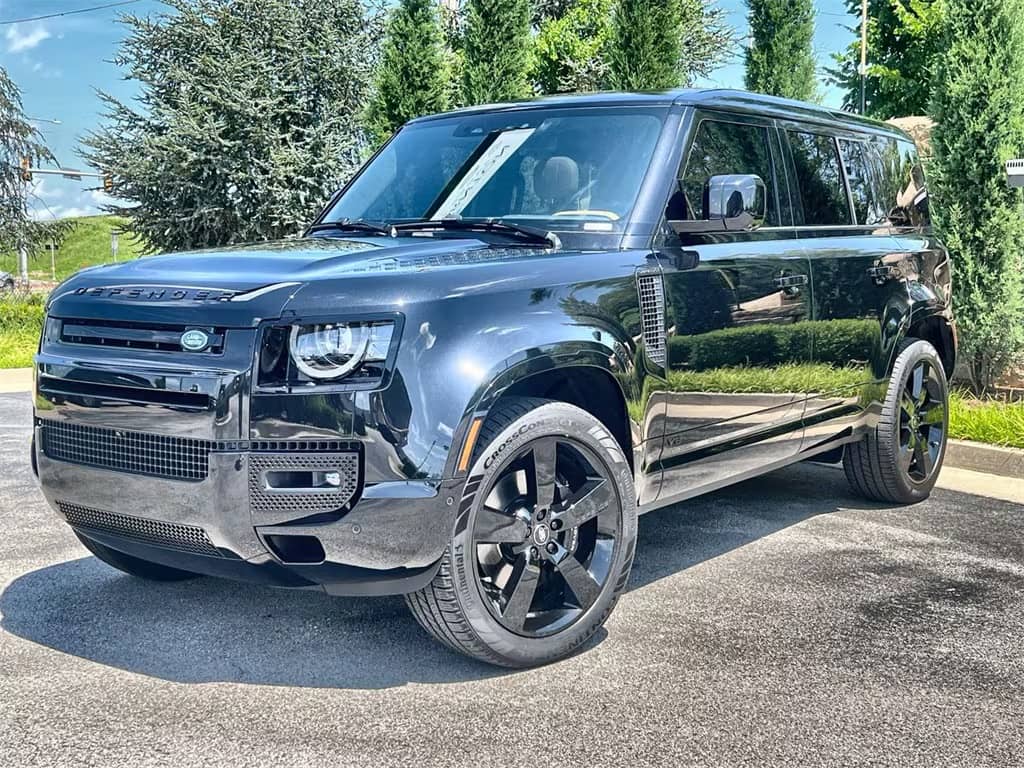
The base vehicle has a broad market. Thousands of potential buyers may be interested in a used Chevrolet Suburban, Cadillac Escalade, Toyota Land Cruiser, Mercedes-Benz G-Class, or Range Rover.
The armored version has a much smaller market so it is all about supply and demand.
However, the armor itself can be extremely valuable to the right buyer.
Consider two hypothetical vehicles:
Vehicle A
- $70,000 base SUV
- $150,000 armoring
- $220,000 total investment
Vehicle B
- $70,000 used SUV
- No armor
- $70,000 purchase price
A buyer who doesn’t need protection will probably choose Vehicle B.
But a buyer who needs a B6 armored SUV doesn’t necessarily want to purchase Vehicle B and then spend months and potentially six figures having it armored.
For that buyer, Vehicle A has a significant advantage: the expensive, time-consuming work has already been completed.
That is why the resale value of an armored vehicle is better understood as a combination of:
- The value of the underlying vehicle
- The value of the armor and security equipment
- The condition and remaining useful life of the armor
- The credibility of the armoring company
- The documentation supporting the build
- The current demand for that particular configuration
The sixth factor is the one owners have the least control over.
How Normal Vehicle Depreciation Compares
To understand armored-vehicle depreciation, it helps to start with ordinary vehicles.
Kelley Blue Book (KBB) notes that depreciation is often the largest ownership expense during the first several years of vehicle ownership. Its current depreciation guidance says most vehicles lose about 20% or more of their value during the first year and can lose roughly 60% of their original purchase price within five years.
Historically, KBB has also reported that an average vehicle can retain only around 35% of its original value after five years, although more recent model-year projections have varied considerably depending on market conditions and vehicle type.
That variation is important.
A Toyota Land Cruiser, for example, can have a dramatically different depreciation curve than a luxury sedan. A highly desirable SUV with strong reliability and limited supply may retain considerably more value than the average vehicle.
Armored vehicles add another variable.
You aren’t simply asking:
“What is this SUV worth?”
You are asking:
“What is this SUV worth to someone who wants this exact level of protection, this exact configuration, and is willing to buy a used armored vehicle?”
That is a much smaller market.
A More Realistic Way to Think About Armored Vehicle Depreciation
There isn’t a single universally accepted depreciation schedule for armored vehicles.
That is important to acknowledge.
There is no equivalent of a standard Kelley Blue Book depreciation curve that accurately captures every aftermarket B4, B6, or B7 armored vehicle.
Armormax’s own market guidance has estimated that high-quality armored vehicles can retain approximately 30%–45% less than their original purchase price after five years, depending heavily on the vehicle and armor condition. Other Armormax market examples have used roughly 40%–50% residual value after five years for well-maintained commercial armored vehicles with current certification.
Those numbers should be viewed as planning ranges, not guarantees.
A reasonable way to model an armored vehicle is therefore to think in scenarios rather than one exact depreciation number.
Example: $250,000 New Armored Vehicle
Suppose you purchase a professionally armored vehicle for $250,000.
A simplified five-year planning model might look like this:
| Scenario | Estimated 5-Year Value | Depreciation |
|---|---|---|
| Strong resale | $150,000 | 40% |
| Moderate resale | $125,000 | 50% |
| Weak resale | $90,000 | 64% |
These aren’t promises of future value. They illustrate why the same $250,000 armored vehicle can produce very different financial outcomes.
A low-mileage, desirable SUV with excellent documentation and current armor certification could perform substantially better than an older sedan with high mileage and incomplete records.
The reverse can also happen.
Why the Buyer Pool Is Smaller
This is probably the most important factor affecting resale.
If you own a normal $100,000 luxury SUV, there may be thousands of potential buyers across the country.
If you own a $200,000 armored SUV, the number of people who want it—and can actually afford it—is dramatically smaller.
Maybe the buyer wants:
- An SUV rather than a sedan
- B6 rather than B4 protection
- A specific manufacturer
- A particular vehicle brand
- Low mileage
- Current ballistic documentation
- Run-flat tires
- An operable-window configuration
- A specific interior
- A discreet exterior
- A particular country or region
- A specific seating configuration
The buyer pool gets smaller with every requirement.
This isn’t necessarily bad.
In fact, a smaller buyer pool can contain very motivated buyers.
Someone casually shopping for a used SUV may walk away from a $180,000 armored vehicle.
Someone actively searching for a B6 armored SUV may consider it a bargain if a comparable new vehicle would cost $300,000 or more.
That is the unique dynamic of the armored-vehicle market.
Why Used Armored Vehicles Can Be Attractive
The limited buyer pool is only half of the equation.
There is also a strong reason someone might specifically seek out a used armored vehicle.
They can save a substantial amount of money and avoid the armoring lead time.
Armormax’s 2026 buyer guidance gives examples of used armored vehicles selling at significant discounts compared with new builds, depending on age, mileage, protection level, and condition.
For example, imagine two comparable vehicles:
New
$300,000
Three-year-old used
$190,000
The used buyer may receive the same basic vehicle platform and ballistic protection for approximately $110,000 less.
For the right buyer, that is compelling.
There is another advantage: availability.
A new armored vehicle has to be sourced, built, inspected, completed, and delivered.
A used armored vehicle can potentially be purchased immediately.
That matters to buyers who have an immediate security requirement.
Documentation Can Be Worth Thousands of Dollars
One of the simplest ways to protect resale value is also one of the easiest to overlook:
Keep your paperwork.
When selling a normal vehicle, a buyer wants to see maintenance records.
When selling an armored vehicle, the buyer may want much more.
Ideally, the owner should maintain records showing:
- Original vehicle purchase information
- Armoring company
- Date of armoring
- Protection level
- Ballistic test documentation
- Armor specifications
- Glass specifications
- Maintenance records
- Suspension work
- Brake work
- Tire replacement
- Run-flat system maintenance
- Electrical modifications
- Accident history
- Armor inspections
- Recertification information, when applicable
Armormax specifically recommends providing documentation related to the vehicle, armoring specifications, maintenance, and the company that performed the conversion when selling an armored vehicle.
Think about it from the buyer’s perspective.
Would you rather buy a $150,000 armored vehicle with a complete history from a recognized armoring company—or one for $125,000 where nobody can explain exactly what was installed?
The cheaper vehicle may actually be the more expensive purchase.
Why the Armoring Company Matters
Brand reputation can influence resale value.
This is similar to the difference between buying a used vehicle from an unknown manufacturer and buying one from an established automotive brand.
A reputable armoring company gives the buyer greater confidence about:
- Engineering
- Materials
- Installation quality
- Ballistic performance
- Structural modifications
- Serviceability
- Documentation
- Replacement parts
- Future support
The buyer isn’t just purchasing metal and glass.
They are purchasing confidence in what was done to the vehicle.
That matters considerably more when the product is responsible for protecting human life.
The Base Vehicle Still Matters—A Lot
Armor doesn’t magically erase normal automotive depreciation.
The foundation still matters.
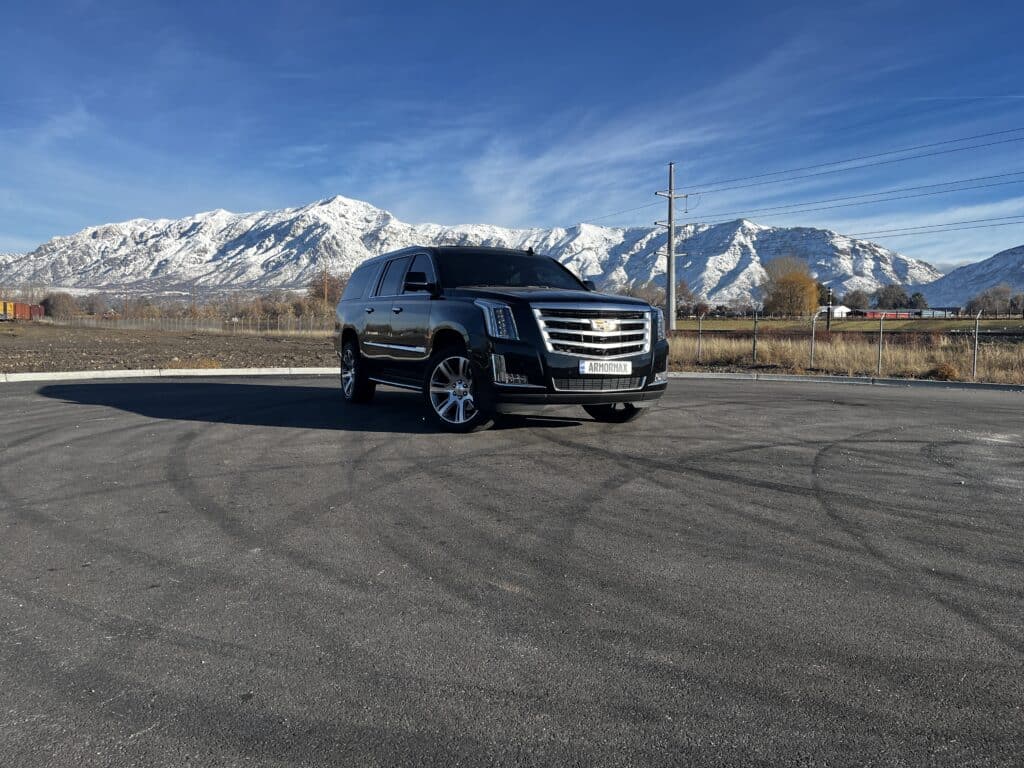
A highly desirable SUV with strong reliability, parts availability, dealer support, and good long-term reputation generally has an advantage over an obscure vehicle that is difficult to service.
This is one reason platforms such as the Chevrolet Suburban, Cadillac Escalade, Toyota Land Cruiser, Range Rover, Mercedes-Benz G-Class, and other premium SUVs are frequently used in armored applications.
They already have recognizable brands and established mechanical ecosystems.
If the armor eventually needs to be serviced, the owner still needs someone capable of maintaining the underlying vehicle.
That becomes particularly important as an armored vehicle ages.
SUVs Usually Have an Advantage Over Sedans
There is no universal rule, but SUVs often make particularly strong armored platforms.
Why?
They provide:
- More interior space
- More payload capacity
- More room for ballistic materials
- Larger suspension margins
- Higher seating position
- Stronger utility appeal
- Greater acceptance in executive and family markets
SUVs also tend to have a broader used-car market than specialized luxury sedans.
That doesn’t mean every armored SUV will outperform every armored sedan.
A six-year-old armored Mercedes sedan could be more desirable than a poorly configured armored SUV.
But if maximizing future resale value is one of your priorities, a popular SUV platform is generally easier to justify than an unusual configuration.
Mileage Matters More on an Armored Vehicle
Mileage is important on every used vehicle.
On an armored vehicle, it can matter even more.
The additional weight of armor puts additional demands on:
- Brakes
- Tires
- Suspension
- Steering components
- Door hinges
- Powertrain
- Cooling systems
Armormax has noted that armored vehicles require more frequent attention to components such as brakes, suspension, tires, and door systems because of the additional weight.
This means a 40,000-mile armored vehicle and a 120,000-mile armored vehicle aren’t simply separated by 80,000 miles on the odometer.
The higher-mileage vehicle may also be approaching expensive component replacements.
That can significantly affect what a buyer is willing to pay.
Trade-In Value vs. Private-Sale Value
This is where many armored-vehicle owners are surprised.
A conventional dealership may be perfectly comfortable taking a used luxury SUV as a trade.
An armored SUV is different.
The dealer has to determine:
Who is going to buy this?
The dealership may not have the specialized customer base, inspection capability, or sales network required to move an armored vehicle.
As a result, a conventional dealer may offer significantly less than a specialized armored-vehicle buyer or broker.
This isn’t necessarily because the vehicle has little value.
It may simply mean the dealer doesn’t want the risk.
For example:
Private/Specialized Market
Potential selling price:
$150,000
Conventional Trade-In
Potential offer:
$110,000–$125,000
The difference can be substantial.
But the higher private-sale price comes with a cost:
time.
You may have to market the vehicle, answer questions, qualify buyers, arrange inspections, negotiate financing, and potentially wait months for the right buyer.
A trade-in sacrifices some upside in exchange for convenience.
Why Trade-Ins Can Be Particularly Difficult
Dealerships generally prefer inventory that turns quickly.
A normal luxury SUV can be marketed to a broad audience.
An armored vehicle may sit on the lot waiting for the one customer who wants an armored vehicle.
Every additional day of inventory costs the dealer money.
There is also additional uncertainty.
The dealer may not know:
- Who installed the armor
- What materials were used
- Whether the armor remains structurally sound
- Whether the glass has been properly maintained
- How much additional weight was added
- Whether the suspension was upgraded appropriately
- Whether the vehicle has been modified after armoring
That uncertainty gets reflected in the offer.
In other words:
The trade-in discount is often a risk premium.
The Best Strategy: Plan for Resale Before You Buy
If resale matters to you, the time to think about resale is before purchasing the vehicle.
Start with the end in mind.
Choose a platform with broad demand.
Choose a reputable armoring company.
Avoid unnecessary modifications.
Select protection levels that have a meaningful market.
Keep the mileage reasonable.
Maintain the vehicle aggressively.
Keep every document.
And avoid making the vehicle so personalized that only one person in the world would want it.
This is one area where conventional automotive advice and armored-vehicle advice overlap.
Kelley Blue Book specifically recommends maintenance, good records, and avoiding excessive customization as ways to protect resale value.
Does Spending More on Armor Increase Resale Value?
Not necessarily.
This is another important distinction.
Suppose you spend an additional $50,000 on specialized equipment.
That doesn’t mean the vehicle’s resale value automatically increases by $50,000.
You might value:
- Smoke systems
- Advanced communications
- Specialized security equipment
- Custom interiors
- Hidden compartments
- Special lighting
- Custom electronics
- Unique seating arrangements
But the next buyer may not.
This is the same reason a $20,000 custom kitchen doesn’t necessarily add $20,000 to a home’s resale price.
Customization creates value only when the next buyer wants the customization.
For maximum resale flexibility, focus on equipment that improves security, reliability, usability, and documentation rather than purely personal preferences.
What Can Increase Resale Value?
Several factors consistently help.
1. Recognizable base vehicle
Popular SUVs generally have a larger pool of potential buyers.
2. Reputable armoring company
Buyers want confidence that the vehicle was engineered correctly.
3. Documented ballistic protection
Clear documentation reduces uncertainty.
4. Low mileage
Lower mileage generally means less wear on both the base vehicle and armor-related components.
5. Complete maintenance history
Records make it easier for a buyer to trust the vehicle.
6. Current inspection or certification
Where applicable, current documentation can reduce concerns about aging ballistic systems.
7. Factory-like appearance
A discreet, professional installation can appeal to more buyers than an excessively customized vehicle.
8. Desirable configuration
SUVs, executive seating, appropriate protection levels, and useful security features can broaden the audience.
What Can Hurt Resale Value?
The opposite factors can have a major effect.
High mileage
Especially when suspension, brakes, tires, and other components are approaching replacement.
Unknown armor history
This is a major red flag.
Missing documentation
If you cannot prove what was installed, the buyer may assume the worst.
Accident history
A collision involving armored components deserves careful evaluation.
Poor-quality modifications
Improper electrical work or modifications that compromise armored areas can create significant concerns.
Outdated equipment
Older ballistic glass, worn door systems, aging run-flat components, and other specialized equipment can reduce value.
Excessive customization
The more specific the vehicle is to one owner’s preferences, the smaller the future buyer pool can become.
How to Maximize Your Trade-In or Sale
When the time comes to sell, don’t simply drive to the nearest dealership and ask, “What will you give me?”
Get multiple opinions.
A smart selling strategy might include:
Option 1: Conventional dealership
Fastest and easiest.
Option 2: Luxury vehicle dealer
Potentially better understanding of the underlying vehicle, but still limited armored expertise.
Option 3: Specialized armored vehicle dealer
Usually a better audience for the completed product.
Option 4: Private sale
Potentially the highest selling price, but requires more time and effort.
Option 5: Armoring-company network
A specialized company may already know buyers looking for a used armored vehicle.
Armormax, for example, maintains a changing inventory of used armored vehicles and has experience connecting sellers with buyers interested specifically in armored vehicles.
The Biggest Mistake: Comparing Purchase Price to Sale Price
Let’s say you buy an armored vehicle for $250,000 and sell it five years later for $130,000.
At first glance, it looks like you lost $120,000.
But that’s not necessarily the right calculation.
During those five years, you had the use of the vehicle and its protection.
The better financial measurement is:
Total cost of ownership = purchase price + operating costs + maintenance + insurance − resale value
If the vehicle cost $250,000, you spent $40,000 maintaining and operating it above normal vehicle costs, and eventually sold it for $130,000:
$250,000 + $40,000 − $130,000 = $160,000
That’s your approximate five-year ownership cost before financing, taxes, fuel, and other expenses.
This is a much more useful number than simply saying, “I lost $120,000.”
The Counterpoint: Don’t Buy Armor as an Investment
There is one important warning.
An armored vehicle should generally not be purchased because you expect it to appreciate or behave like an investment.
It is a specialized vehicle.
The primary return is protection, mobility, security, and peace of mind.
Resale value is important because it reduces the long-term cost of ownership—but it shouldn’t be the primary reason you choose to armor a vehicle.
The smartest buyer asks:
“What vehicle gives me the protection I need while giving me the best combination of usability, reliability, operating cost, and future resale value?”
That’s a much better question than:
“Which armored vehicle will make me the most money when I sell it?”
The Bottom Line
Armored vehicles occupy a strange but potentially attractive corner of the automotive market.
Their buyer pool is smaller than the market for conventional vehicles, which can make them harder to sell and can reduce conventional dealership trade-in offers.
But the smaller market has an important counterbalance: buyers who need armored protection are often highly motivated buyers.
A professionally built, well-maintained armored vehicle with a desirable base platform, current documentation, reasonable mileage, and a recognized armoring company behind it can remain valuable for years.
The most important factors affecting resale are:
- Base vehicle
- Armoring company
- Protection level
- Age of the armor
- Mileage
- Maintenance
- Ballistic documentation
- Vehicle configuration
- Current market demand
- Where and how the vehicle is sold
If resale value matters to you, the best strategy isn’t to try to predict the exact future price.
Instead, build a vehicle that will be desirable to the largest possible number of qualified armored-vehicle buyers.
That means choosing a proven platform, using a reputable armoring company, avoiding unnecessary customization, maintaining the vehicle properly, and documenting everything.
And when it eventually comes time to sell, don’t judge the vehicle’s value solely by what a conventional dealership offers.
An armored vehicle is not a conventional used car.
It is a specialized security asset sitting on top of a conventional automotive platform.
That distinction explains both its depreciation—and its potential resale value.
For owners considering buying, selling, or trading an armored vehicle, Armormax can help evaluate the vehicle, its protection system, documentation, and potential market. The company also maintains an inventory of pre-owned armored vehicles and works with buyers looking for specialized protection.
Explore Armormax armored vehicles
Interested in selling or trading your armored vehicle? Contact Armormax at 801-393-1075 to discuss your vehicle and available options.